Service Dog, Therapy Dog, or Emotional Support Animal?
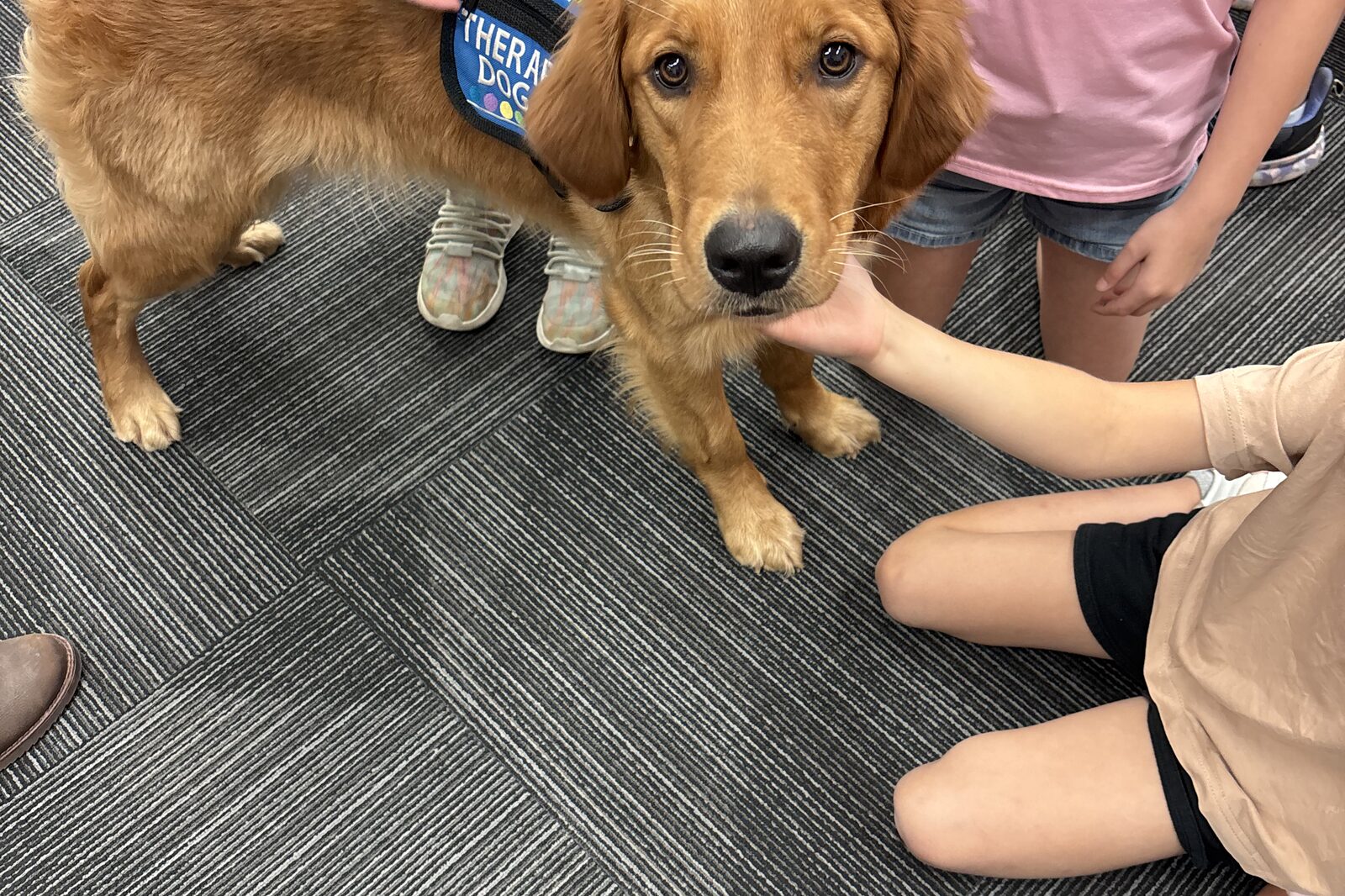
Three terms get used as if they mean the same thing — service dog, therapy dog, emotional support animal — and they do not. The differences are real, they change where a dog is allowed to go, and they decide how much training the dog needs. Here is the plain version, and where working dogs actually come from around Cape Girardeau and Jackson.
What is a service dog?
Under the Americans with Disabilities Act, a service animal is a dog individually trained to do work or perform tasks for a person with a disability. The key word is tasks. Guiding someone who is blind, alerting to a seizure, retrieving dropped items, interrupting a panic attack — the dog has been taught to do something specific that relates to the handler's disability.
Because the dog is trained to work, a service dog generally goes where its handler goes, including places pets cannot. That access follows the dog's job, not the dog's temperament.
What is a therapy dog?
A therapy dog does something almost opposite: it provides comfort to other people, not to its handler. Therapy teams visit schools, hospitals, healthcare facilities, veterans and first responders — a calm, trained presence for the days that need one most.
A therapy dog is there by invitation. A school or hospital asks a team in. That is very different from public access rights, and it is the single most common mix-up we hear.
What is an emotional support animal?
An emotional support animal provides comfort simply by being present. There is no task training involved, and an ESA is not a service animal under the ADA — so an ESA does not carry the same public access. ESAs are most often discussed in the context of housing rules rather than restaurants and shops.
For the actual legal text on any of this, the ADA's own guidance at ada.gov is the source worth reading, and a facility's own policy is always the final word on what it allows.
The short version
- Service dog — trained to do specific tasks for its handler's disability. Broad public access.
- Therapy dog — trained to be calm and steady around strangers, and visits by invitation to comfort others. No public access rights.
- Emotional support animal — comforts by presence, no task training, not an ADA service animal.
How much training does each one really need?
This is where the gap shows. A service dog is years of work: raised carefully as a puppy, socialised deliberately, then taught skills slowly and honestly until they hold up under pressure in the real world. A therapy dog needs rock-solid temperament and manners around strangers, noise and equipment. An emotional support animal has no training standard at all.
None of the three happens by accident. Even the steadiest dog needs the foundation — and that part starts the same way for every dog, working or not.
Where do working dogs around Cape Girardeau come from?
Closer than most people expect. Paw Talk's owner, Makayla, is the founder of Hearts of Gold Legacy Canines, a Missouri 501(c)(3) that raises and trains dogs for service and therapy work and places them free to the people who need them.
Dogs start in volunteer homes, where a puppy raiser gives them their first year and the socialisation every working dog's career is built on. From there the training gets specific, and the dog is placed where it can do the most good — beside a veteran, in a hospital hallway, in a classroom, or with one person whose independence depends on the partnership.
If that work interests you, read about the nonprofit here.
Could my dog become a therapy dog?
Maybe — and temperament matters more than breed. The dogs that do well are the ones that stay soft and settled when a room gets loud, busy or unpredictable, and that genuinely enjoy strangers rather than tolerating them.
The honest first step is not a certificate. It is basic obedience that holds up outside your living room, and real exposure to other dogs and people. Training at Paw Talk builds exactly that foundation, whether your dog is headed for therapy work or just for an easier life in a busy house.
Where to start
If you are trying to work out which path fits your dog, start with the basics and be honest about temperament. We are happy to talk it through — call or text (573) 703-6206, or get in touch here.